


Message from Director General
The global per capita consumption of edible fish and shellfish has approximately doubled over the past half century, and as demand has expanded, aquaculture production has increased significantly. While global demand continues to grow, Japan’s aquaculture industry has seen its growth stagnate. However, because Japanese aquaculture products are of high quality, there is believed to be substantial potential demand in international markets, and the government is pursuing policies that support the stable growth and development of the aquaculture sector. At the same time, the coastal areas where aquaculture takes place have been greatly affected by climate change, especially rising seawater temperatures. For the fish farming industry, prolonged and geographically expanding red tide events, which pose major constraints, have also been observed.
Under this background, the Fisheries Technology Institute has advanced research under a two division structure: the Aquaculture Research Department, responsible for various fields related to aquaculture such as artificial seed production, breeding, feed development, and disease control; and the Environment and Fisheries Applied Techniques Research Department, responsible for areas such as fishing port and fishing ground development, coastal fishing ground environmental assessment and management, and evaluation of seafood safety. Major achievements to date include, within the Aquaculture Research Department, technologies related to the mass production of glass eels, the establishment of early seed production techniques for Pacific bluefin tuna, and the development of new rearing methods for high value species such as groupers and spotted halibut. The division also helped reduce the risk of collapse in the pearl farming industry by identifying the pathogen responsible for Akoya pearl oyster mantle shrinkage disease and developing a rapid detection method.
Meanwhile, the Environment and Fisheries Applied Techniques Research Department has introduced advanced technologies into its research fields, presenting next generation models for the fisheries industry. These include quantitative evaluation of artificial reef effectiveness using underwater drones, construction of an AI based system for predicting the age of returning chum salmon, and the world’s first successful completion and demonstration of a hydrogen fuel cell aquaculture work vessel. Additional efforts include publishing a CO₂ sequestration assessment guidebook for seagrass and seaweed beds, applying for variety registration of high temperature tolerant wakame strains adapted to climate change, identifying the causative species of the red tide that caused severe damage in Hokkaido in autumn 2021 and establishing forecasting techniques, and evaluating the effects of microplastics on marine organisms. Furthermore, the institute has promoted the international standardization of freshness evaluation methods for raw fish and shellfish, paving the way for expanding exports that leverage the high freshness of Japanese seafood as a branding strategy. Regarding the mass mortality of oysters, which became a major issue in 2025, both divisions are jointly working to identify the cause and develop countermeasures.
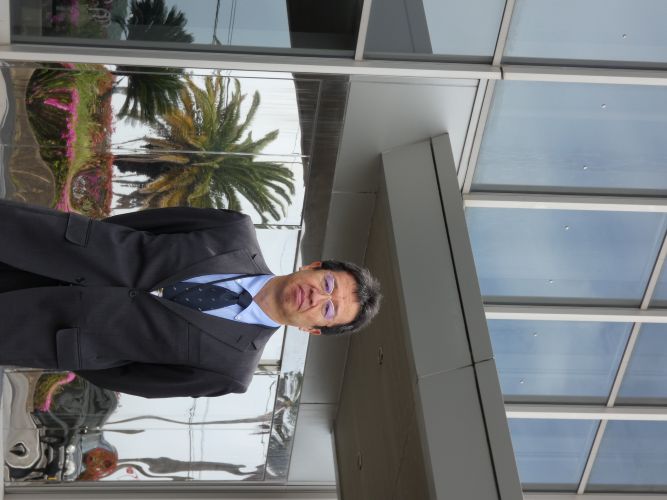
The sixth mid to long term planning period began in April 2026. To respond to environmental changes surrounding fisheries and aquaculture, the Fisheries Technology Institute has implemented partial organizational restructuring: reorganizing research units within the Aquaculture Research Department, renaming the Environment and Fisheries Applied Techniques Research Department to the Environment and Fundamental Research Department, and establishing new units specializing in areas such as behavioral characteristics of marine organisms and primary productivity in coastal area. The institute will continue to advance research with the aim of contributing to the stable supply of marine products and the sustainable development of the fisheries industry through the research and development of various production technologies that support fisheries and aquaculture, as well as through understanding and assessing fishing ground environments.
April 1, 2026
Kazuhiko Mochida
Director General, Fisheries Technology Institute

